png.png)

From finding the right spot to understanding what it costs, here's how to plan your restaurant micro wedding.
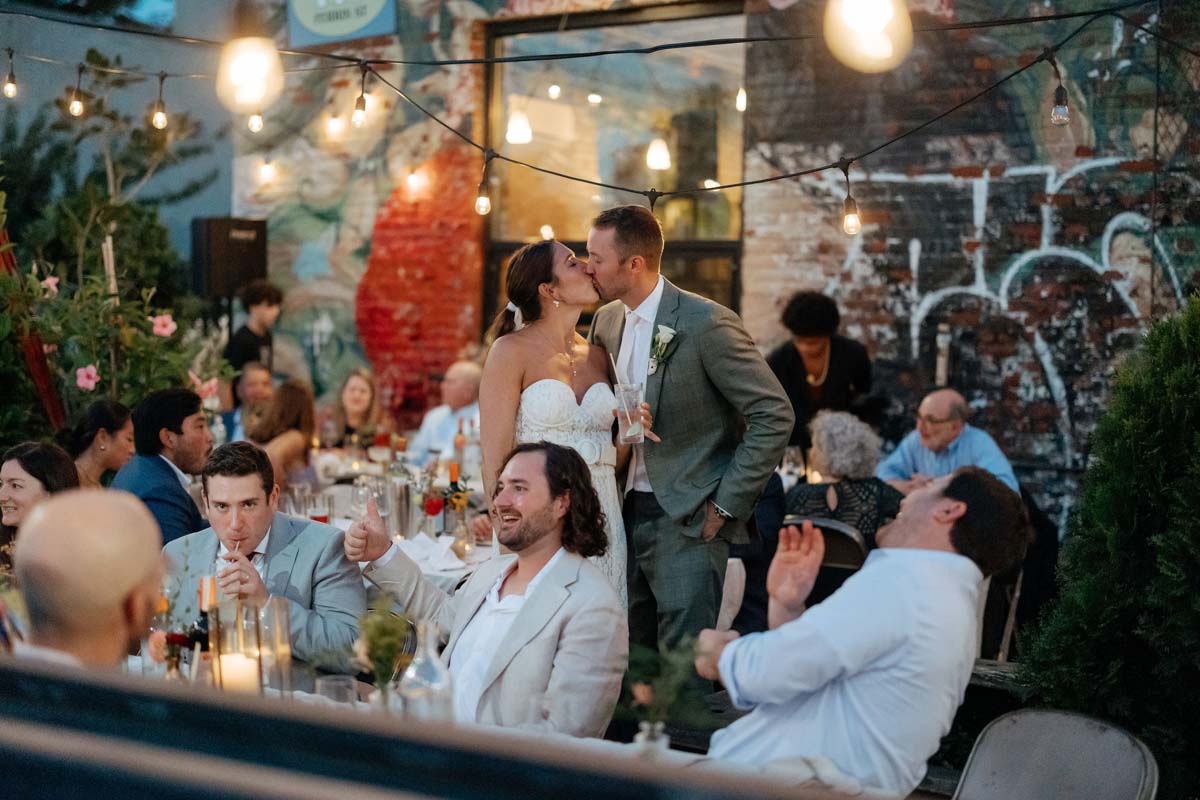
There is a particular kind of wedding that stays with you as a guest. Not the grandest one you have attended, or the most elaborate. The one where dinner was genuinely good, the room felt full without feeling crowded, and the whole evening had the quality of something that was actually planned for you rather than produced for a crowd. More often than not, that wedding happened at a restaurant.
For couples planning a wedding of 50 guests or fewer, a restaurant micro wedding is one of the most considered choices you can make. The setting already has a point of view. The food is the point, not an afterthought. And the evening has a natural shape that a blank-slate venue simply cannot provide.
If you have been circling the idea and cannot quite commit, this is the guide. We will cover what makes it work, what to watch out for, what it actually costs, and how to find the right place.
Yes, though it depends on the space. Some restaurants have outdoor patios, garden settings, or private rooms large enough to host a ceremony followed by a reception on the same property. Others are better suited to reception-only events, where you hold the ceremony elsewhere — a courthouse, a park, a small chapel — and arrive at the restaurant for dinner. Both are valid, and plenty of couples planning a small restaurant wedding actively prefer the ceremony-elsewhere approach because it lets each setting do what it does best.
If you want the ceremony and reception in the same place, ask the restaurant directly about the logistics of a room turnover. A covered garden patio that seats 40 for dinner might comfortably accommodate a standing ceremony for 30 beforehand. A private dining room with fixed tables may not. The question of whether staff can reset the space between ceremony and reception — and how long that takes — will shape your timeline more than almost anything else.

The sweet spot for a restaurant micro wedding is somewhere between 10 and 50 guests. This is not a constraint so much as a natural fit. A room built to seat 50 people feels alive and full at 30 or 40. The same guest count in a traditional venue built for 200 feels thin, quiet, and slightly sad in a way that no amount of florals can fix.
There is also the structural simplicity of it. Catering, bar, staffing, glassware, linens, furniture — all of it is already there. You are not building a wedding from an empty room and sourcing every element separately. You are stepping into a space designed to host people well and making it yours for one evening. That shift in starting point changes what planning actually feels like, and significantly reduces the number of vendors and moving parts involved.
And then there is the food itself. In a recent Real Weddings Study, 62% of couples named food and beverage as a primary wedding priority. At a traditional venue with an approved caterer list and an off-site kitchen, the meal is often the weakest part of the evening. At a restaurant, it is the reason the restaurant exists. The two things are not remotely equivalent.
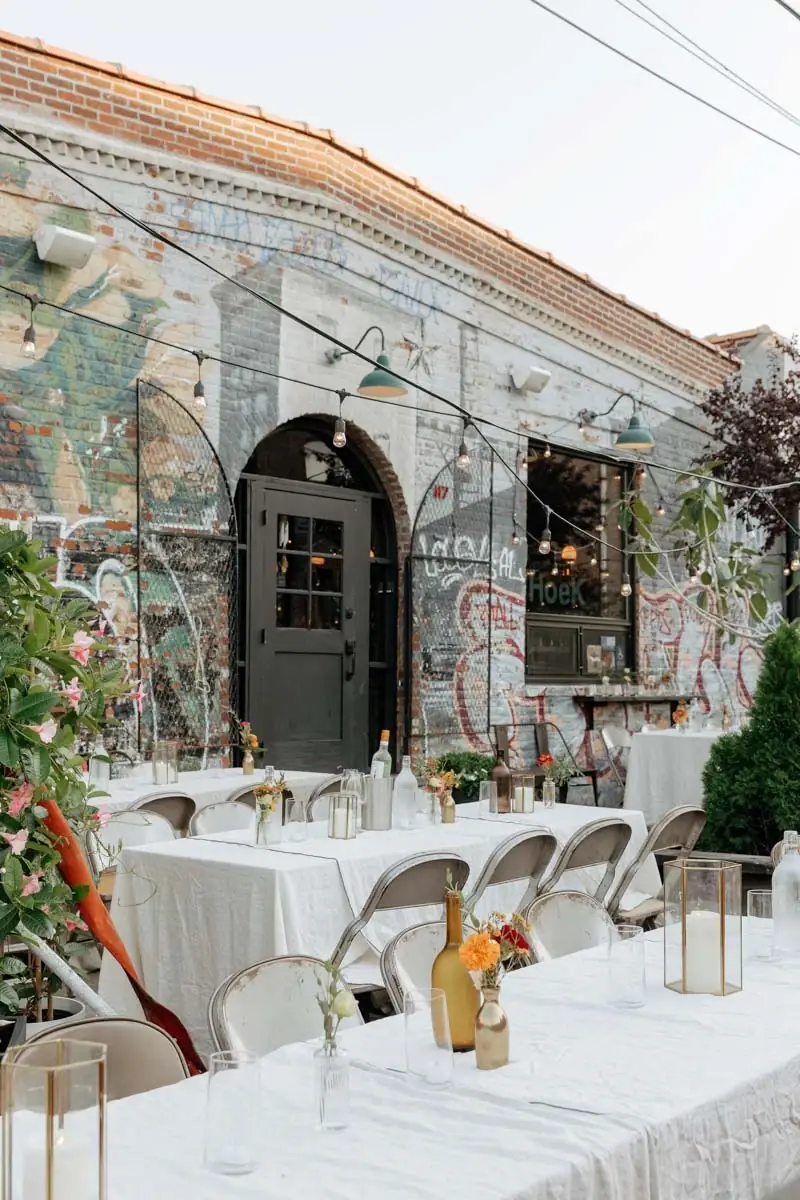
An intimate restaurant wedding is not right for every couple, and the reasons to love it are also the reasons some couples should not choose it. It is worth being honest about both before you start the search.
On the side of yes: the setting already has character, which means you are adding personal touches rather than building an atmosphere from nothing. The costs tend to be more bundled than they appear at first — venue, catering, bar, and staffing often come in a single quote rather than as separate line items — which can make a restaurant wedding more straightforward to budget than a traditional venue. Couples who choose a restaurant with personal significance — the place they had their first dinner together, their neighborhood spot of ten years — bring a layer of meaning to the evening that cannot be staged or rented. And because most restaurant private spaces cap somewhere between 30 and 60 guests, the format naturally enforces the kind of intimacy that larger weddings spend significant money trying to recreate.
On the side of no: if a dance floor is the centerpiece of your evening, most restaurant spaces are not built for it. Decor flexibility is limited — many restaurants restrict what you can bring in based on storage and setup constraints, and some will not allow candles, outside florals, or furniture swaps. Photography in lower-light dining rooms with tighter angles requires a different approach than outdoor or ballroom settings, and some photographers are better equipped for it than others. And the costs, which initially appear streamlined, have a way of expanding once service charges, gratuity, sales tax, and overtime fees are factored in. None of these are dealbreakers, but all of them are worth knowing before you fall in love with a space.
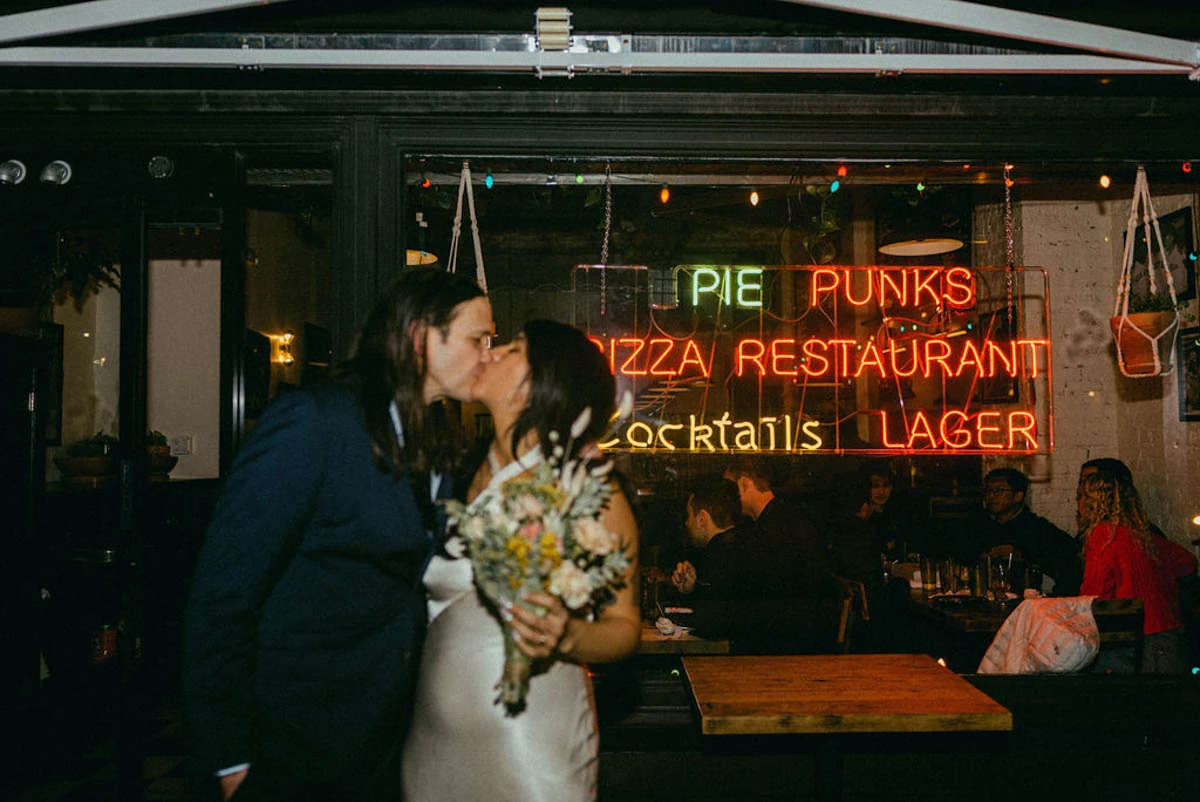
The best place to start is your own dining history. The restaurant where you had your first real dinner together, the place you go back to every anniversary, the neighborhood spot that already feels like yours — these are not just convenient options. They are places where the room will mean something to your guests before the first course arrives, and where the staff already knows how to make you feel at home. That is a harder thing to manufacture than most couples realize.
From there, think about the kind of evening you actually want. A wine bar with an intimate private room creates a different atmosphere than a rooftop restaurant or a garden-patio trattoria. The style of the restaurant should feel like an extension of how you actually live, not an elevated version of something you are not. If you are casual people who love good food, a Michelin-starred tasting menu may feel more like a performance than a celebration. If you love a specific kind of cuisine or a specific neighborhood, those instincts are worth following.
When you have a few candidates, visit during service hours rather than during a quiet walk-through. See the space in use: how it sounds when it is full, how the lighting feels at dinner, how the staff moves. Ask to see photos or video from previous private events. Request a full pricing breakdown that includes service charges and gratuity, not just the food and beverage minimum. Ask about exclusivity — whether you can have a full or partial buyout, and how the restaurant handles other guests if part of the space remains open during your event. A restaurant that has hosted weddings before will have clear answers to all of these questions. One that hesitates or seems to be making it up as it goes is a signal worth heeding.
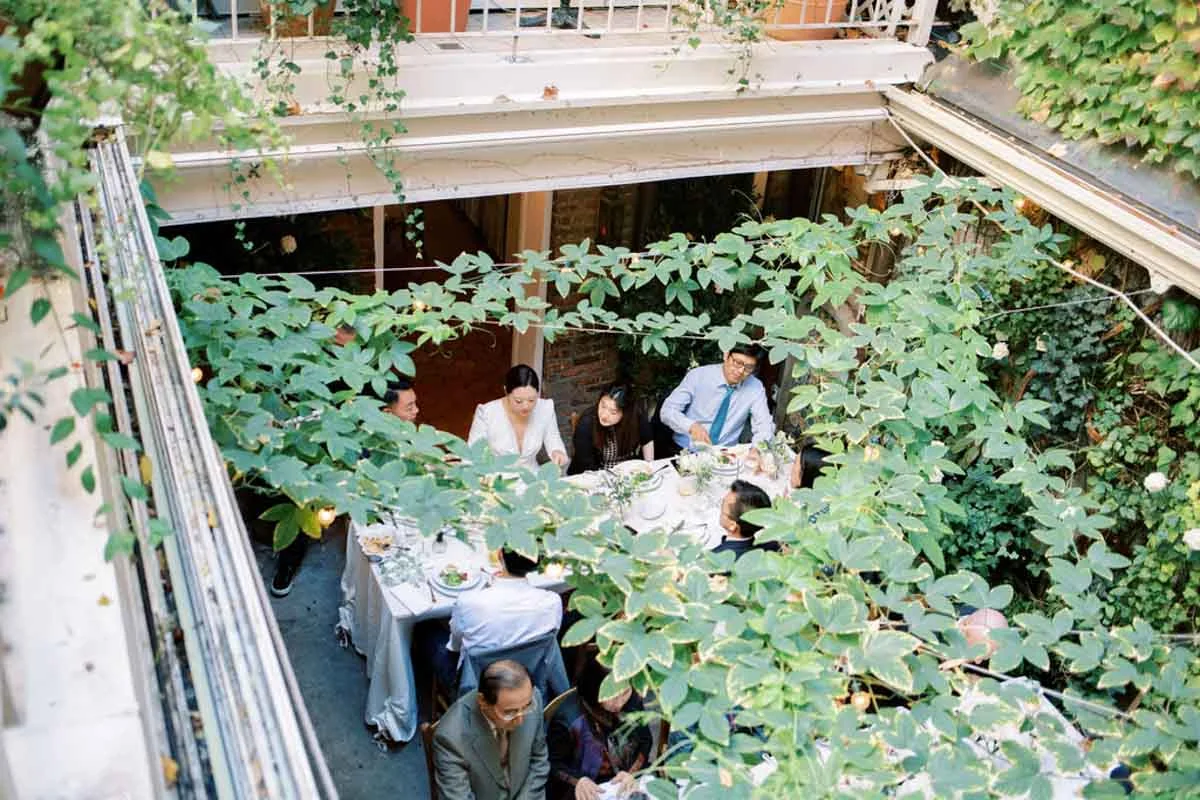
Rather than a venue fee, most restaurants work with a food and beverage minimum — a floor on what you agree to spend on food and drink. A full buyout, which closes the restaurant entirely to outside guests, typically requires a minimum that approximates what the restaurant would earn on a normal weekend dinner service. A partial buyout, where you book a private room and the rest of the restaurant continues operating, comes with a lower minimum and is often a better fit for a small restaurant wedding.
For a rough sense of scale: restaurant micro wedding receptions for 30 to 50 guests in a mid-range city setting typically start somewhere between $4,000 and $8,000 all-in. In major markets, full buyouts can run considerably higher — in cities like New York or Los Angeles, $20,000 to $40,000 for a full buyout at a popular restaurant is not unusual. But for a private room at a well-regarded neighborhood spot on a Sunday night, the number can be surprisingly reasonable.
The place where couples most commonly get tripped up is the line items beyond the F&B minimum. Service charges, which typically run between 20 and 24 percent and go to the restaurant rather than the staff, are separate from gratuity, which goes to the people who actually serve you. Sales tax applies to both. Overtime fees apply if your event runs long. By the time all of these are added, the true cost is often 30 to 40 percent above the quoted minimum. Get a fully itemized estimate in writing before you make any decisions, and treat the minimum as a floor, not a ceiling.
Because a restaurant already has a visual identity, you are working with the space rather than transforming it — and that is actually a gift. The temptation to layer a separate aesthetic over a room that already has one usually produces results that feel slightly off, like a costume over a personality. A few well-chosen additions tend to land with more intention than a full styling treatment.
A welcome sign or menu card in your own lettering sets a personal tone before anyone sits down. Table numbers or place card details with significance — the year you met, a shared reference, a place that matters to you both — add texture without competing with the room. Candles work in almost every restaurant setting and transform the atmosphere without requiring any structural changes. If the restaurant allows outside florals, one statement arrangement at the ceremony spot or sweetheart table is usually more effective than small arrangements scattered across every surface.
For music, ask about the restaurant's existing sound system early. Many can accommodate a curated playlist without any additional equipment, and a solo musician — a guitarist, a vocalist — fits the scale of a restaurant micro wedding in a way that a DJ setup rarely does. The scale of the entertainment should match the scale of the evening.

Book at least six months in advance for peak season dates. Well-regarded restaurants fill private events quickly, and you want time to work through the details properly once the space is confirmed. If your preferred restaurant is only available on a weekend during peak season, that may mean a higher minimum -- and if they are willing to host you on a Tuesday or a Sunday brunch, that flexibility is often worth exploring. Some of the best restaurant weddings happen on weekdays, and the staff tends to give those events more attention precisely because the stakes feel more personal.
Tell your vendors about the venue early. Photographers need to know about lower light and tighter angles before they show up. Bakers should know if a working kitchen might affect certain frostings. Florists need to understand setup windows, what can be stored overnight, and whether there are restrictions on what the restaurant will allow. The earlier everyone has this information, the fewer surprises there are on the day.
Finally, work with the restaurant's coordinator -- or bring a planner who has done this before -- to map out the pacing of the evening in advance. Unlike a traditional venue with a dedicated events manager running a schedule, a restaurant reception has a more organic flow. Knowing when dinner service starts, when speeches happen, and how the kitchen needs to be cued keeps everything moving without anyone feeling rushed.
The Collections are hand-picked small-wedding venues and pros, screened the way we'd screen them for a friend.
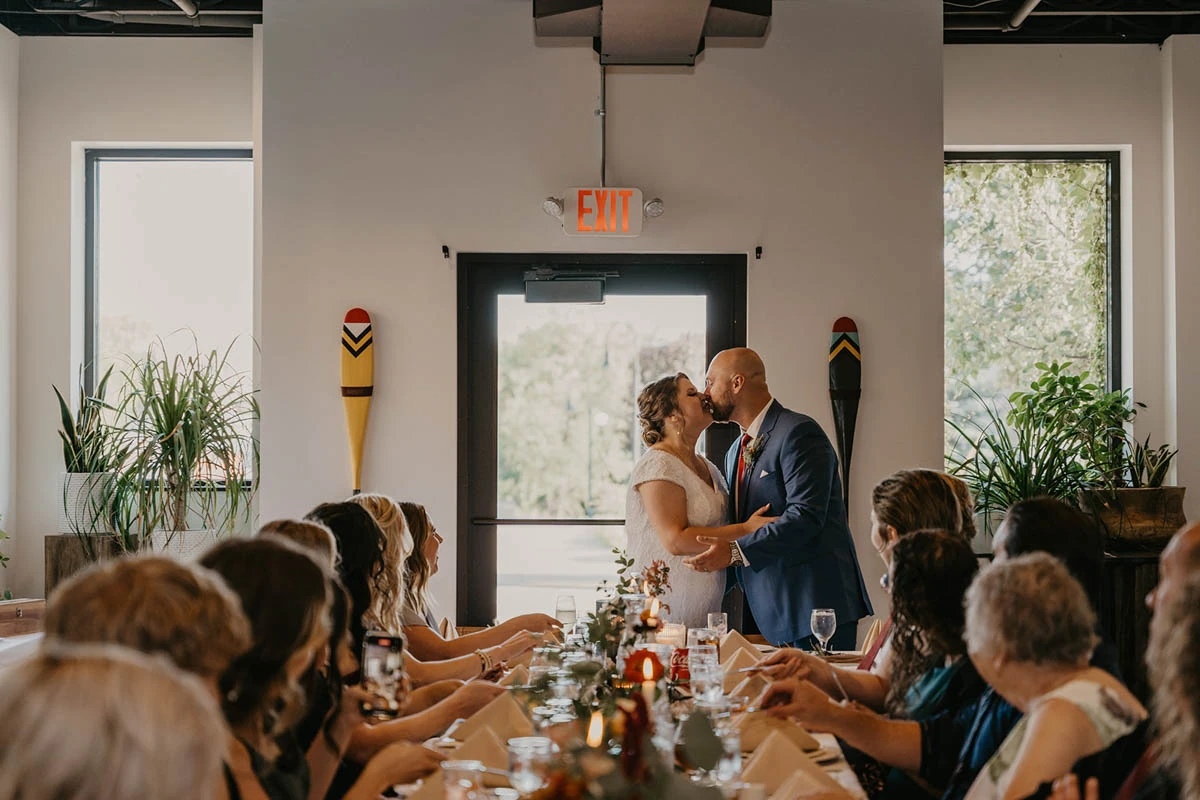
A restaurant micro wedding works best for couples who genuinely care about the meal, value a setting with its own character, and want their guests to feel like they were invited to something personal rather than assembled for a production. It is a format built around presence over spectacle — and for couples who find that framing appealing rather than limiting, it tends to produce evenings that guests talk about for years.
It is not the right choice if a dance floor is essential, if your guest list exceeds 50 or 60 people, or if you want full creative control over the visual environment. Knowing which camp you fall into is the most important decision you will make before you start the search.
If the idea of a great meal, an intimate room, and a night that feels like an extension of your actual life sounds like the wedding you want, an intimate restaurant wedding is worth taking seriously. The industry has been building the perfect setting for this kind of celebration for decades. You just have to book the right one.
A restaurant micro wedding has its own logistics, and the vendors who have worked in these settings before make a real difference. Browse the microWED vendor directory to find photographers, planners, and officiants who specialize in intimate celebrations — including restaurant micro weddings and private dining receptions.
Wedly bundles every tool small-wedding couples and planners actually use — budget, guests, RSVPs, seating, free wedding site. one price for everything.
learn more →
.JPG)
